
Tuberculosis
The 19th century’s silent killer
By Valentin Charlier & Sarah Heynssens
For centuries, tuberculosis was one of the world’s deadliest diseases. In Belgium, it remained a major cause of death until the early 20th century, spreading easily in the crowded and often poor living conditions created by rapid urbanisation and industrialisation.
But was everyone affected in the same way? Let’s take a closer look at how tuberculosis shaped lives across Belgium—and how its deadly impact was eventually brought under control.
Image: La Miseria, by Cristobal Rojas, 1886 , Oil on Canvas (source: Galería de Arte Nacional, Caracas-Venezuela)
What is tuberculosis?
What is tuberculosis
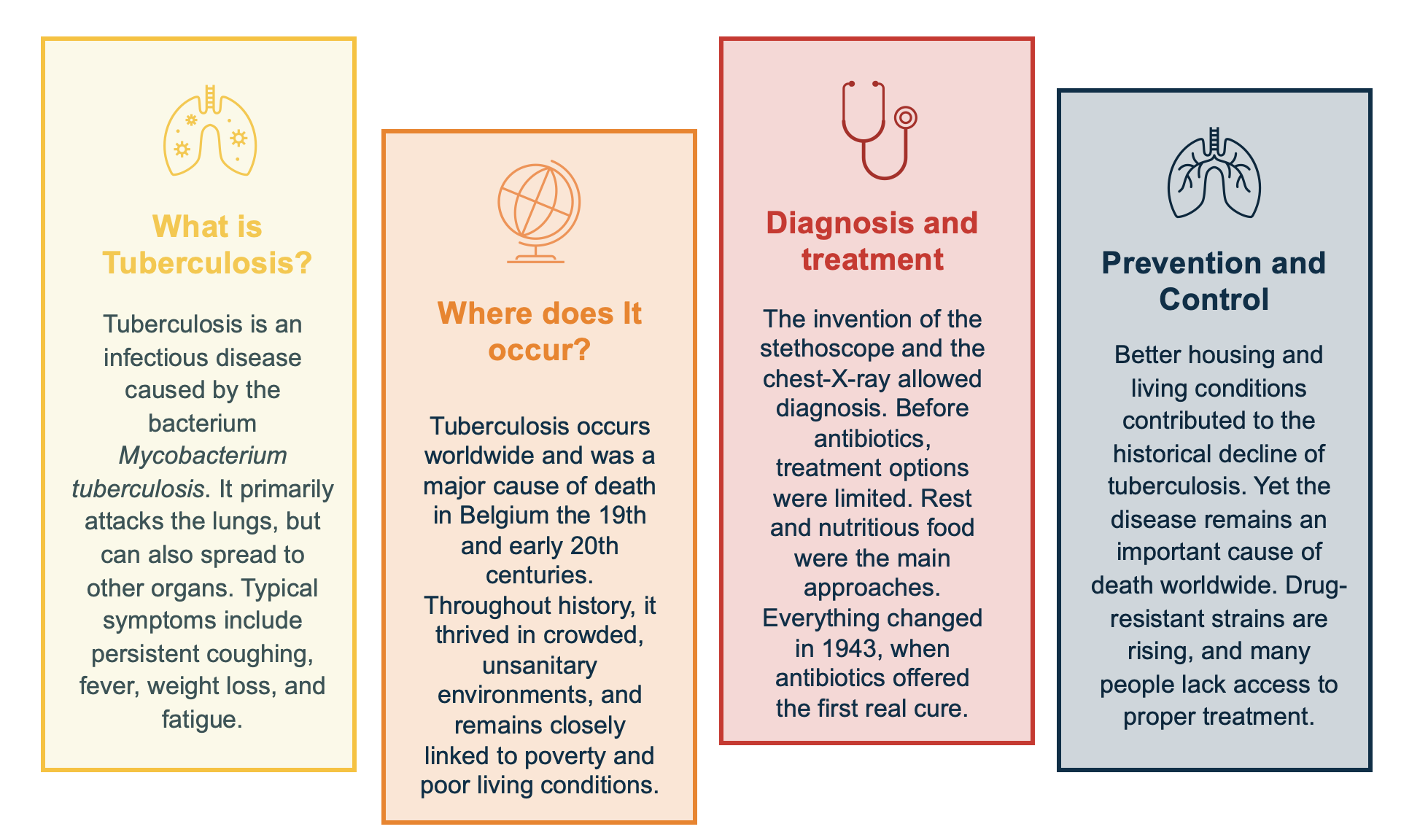
Tuberculosis is an infectious disease caused by the bacterium Mycobacterium tuberculosis. It primarily attacks the lungs, but can also spread to other organs. Typical symptoms include persistent coughing, fever, weight loss, and fatigue.
Where does it occur?
Tuberculosis occurs worldwide and was a major cause of death in Belgium the 19th and early 20th centuries. Throughout history, it thrived in crowded, unsanitary environments, and remains closely linked to poverty and poor living conditions.
Diagnosis and treatment
The invention of the stethoscope and the chest-X-ray allowed diagnosis. Before antibiotics, treatment options were limited. Rest and nutritious food were the main approaches. Everything changed in 1943, when antibiotics offered the first real cure.
Prevention and control
Better housing and living conditions contributed to the historical decline of tuberculosis. Yet the disease remains an important cause of death worldwide. Drug-resistant strains are rising, and many people lack access to proper treatment.
History of tuberculosis
Tuberculosis is one of humanity’s oldest known diseases. Evidence of the infection has been found in human remains from the Neolithic period, and it was described in the medical writings of ancient civilisations, including Egypt, India, and Greece. Because it gradually weakens the body, tuberculosis was long known as phthisis or “consumption.” For centuries, however, its true cause remained a mystery. Many people believed it was inherited or the result of an imbalance within the body.
Tuberculosis became a major public health crisis during the Industrial Revolution. Rapid urbanisation in the early 19th century brought large numbers of people into overcrowded cities, where poor housing, inadequate sanitation, and malnutrition created ideal conditions for the disease to spread. Around 1850, tuberculosis had become the leading cause of death in many industrialised countries, accounting for 15–20% of all deaths.
Belgium was no exception. In 1851, infectious diseases were responsible for around 40% of all deaths, and tuberculosis was by far the deadliest among them. It accounted for 18.7% of all deaths, far exceeding other common infectious diseases such as pneumonia (4.1%), enteritis (4.1%), and whooping cough (2.9%) (Figure 1). Tuberculosis remained one of Belgium’s leading causes of death well into the 20th century.
A major breakthrough came in the late 19th century. In 1865, the French physician Jean-Antoine Villemin demonstrated that tuberculosis was contagious. Seventeen years later, in 1882, the German physician and microbiologist Robert Koch identified the bacterium Mycobacterium tuberculosis as the cause of the disease. These discoveries transformed the fight against tuberculosis, leading to improved hygiene measures, efforts to prevent transmission, and the establishment of sanatoria, where patients were isolated and treated to limit the spread of infection.
Click the disease names at the top to include or exclude them from the graph.
Figure 1: Percentage of deaths due to major infectious diseases in Belgium, 1851-1978
Source: Exposé de la situation du royaume, 1851-1900; Documents statistiques, 1857-1869; Annuaire statistique de la Belgique, 1870-1978; calculations by the authors.
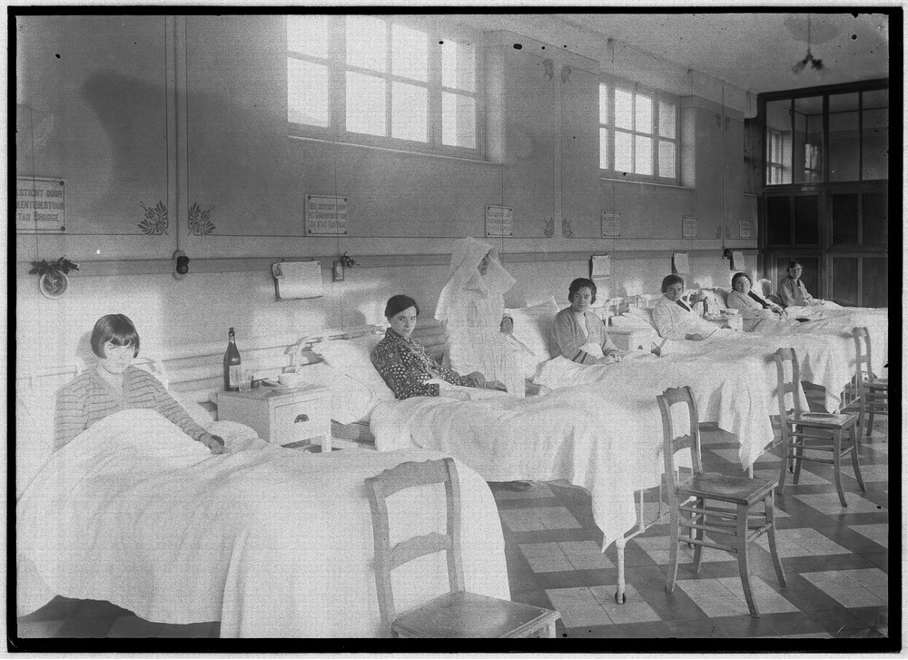
Once scientists understood that tuberculosis was contagious, efforts to control it shifted from treating individuals to preventing its spread. Public health measures focused on improving housing, nutrition, sanitation, and working conditions, while infectious patients were increasingly cared for in sanatoria. Throughout the first half of the 20th century, these specialised institutions became a cornerstone of tuberculosis control, providing long-term care while reducing transmission.
Another important milestone was the development of the Bacille Calmette-Guérin vaccine (BCG vaccine) in the early 20th century. The vaccine was declared safe by the League of Nations in 1928. In Belgium, however, its uptake remained limited for many years because many physicians were sceptical of its effectiveness and no nationwide vaccination programme was introduced.
Figure 2 : View of the Elisabeth sanatorium in Sijsele in 1932
A further breakthrough came in 1947, when the first effective antibiotics against tuberculosis became available. These drugs revolutionised treatment and greatly increased patients’ chances of recovery.
By that time, however, tuberculosis mortality had already been declining for decades, largely because of better living conditions, improved nutrition, public health measures, and the isolation of infectious patients. Some researchers have also suggested that increasing population resistance may have contributed to the long-term decline.
The history of tuberculosis therefore shows that medical innovations alone cannot explain improvements in health. As living standards improved, tuberculosis mortality began to fall even before vaccines and antibiotics became widely available. Medical advances accelerated this decline, but built on improvements that had already begun through better public health and social conditions.
Tuberculosis remains a global health challenge today. Although effective treatment is available, the disease continues to disproportionately affect vulnerable populations. Alongside persistent poverty and unequal access to healthcare, modern risk factors such as HIV/AIDS, Diabetes, smoking, and substance use increase the risk of developing active tuberculosis.
From killing 1 in 5, to nearly disappearing
Figure 3 shows how tuberculosis mortality evolved in Belgium over time. When the Belgian government began recording causes of death nationwide in 1851, tuberculosis was by far the country’s deadliest infectious disease. That year, it claimed 17,730 lives, accounting for almost one in every five deaths.
The number of deaths continued to rise, reaching a peak of 19,478 deaths in 1865.
The rapid spread of tuberculosis was closely linked to industrialisation. During the 1840s, many Belgians left the countryside in search of work in expanding industrial cities. While these cities offered new economic opportunities, they also brought overcrowded housing, poor sanitation, difficult working conditions, and widespread malnutrition, making it easier for tuberculosis to spread.
A temporary interruption to this trend occurred in 1866, when Belgium was hit by a major Cholera epidemic. Tuberculosis deaths fell that year, not because the disease had become less dangerous, but because cholera claimed many lives among the same vulnerable population. In the harsh living conditions of the 19th century, people were often exposed to several life-threatening infectious diseases at the same time. In many cases, survival depended less on avoiding illness altogether than on which infection struck first.
After 1870, tuberculosis mortality began a long and steady decline. This improvement started well before the introduction of antibiotics or widespread vaccination. Better nutrition, housing, working conditions, sanitation, and public health all contributed to reducing the burden of the disease and laid the foundation for the decline that continued throughout the 20th century.
Figure 3: Mortality from tuberculosis from 1851 until 1978
Source: Exposé de la situation du royaume, 1851-1900; Documents statistiques, 1857-1869; Annuaire statistique de la Belgique, 1870-1978; calculations by the authors.
A disease of industrial regions?
The earliest tuberculosis statistics should be interpreted with some caution. Before 1903, the number of deaths attributed to tuberculosis was probably overestimated because doctors did not yet have reliable ways to distinguish it from other chronic respiratory diseases. Diseases with similar symptoms—such as persistent coughing, weight loss, and fever—were often grouped together under broad diagnostic labels.
The discovery of the tuberculosis bacterium by Robert Koch in 1882 improved doctors’ ability to recognise the disease. An equally important step came in 1903, when Belgium adopted the first International Classification of Diseases. Before then, tuberculosis was frequently included in the broad category “Phthisis and other chronic diseases.” The new classification separated tuberculosis from other respiratory illnesses, producing a sharp drop in the recorded number of tuberculosis deaths. This decline largely reflects a change in classification rather than a sudden improvement in public health.
Throughout the 20th century, tuberculosis mortality continued its long-term decline, interrupted only by temporary increases during the two World Wars. Wartime disruption—including overcrowding, food shortages, poor hygiene, population displacement, and damage to healthcare services—created conditions in which tuberculosis could spread more easily and become more severe. Even so, the overall downward trend continued. By 1978, tuberculosis caused 296 deaths in Belgium, accounting for less than 1% of all deaths.
Tuberculosis today
Although tuberculosis is now relatively rare in Belgium, it remains one of the world’s deadliest infectious diseases. According to the World Health Organization, an estimated 10.9 million people developed tuberculosis worldwide in recent years, and about 1.09 million people died from the disease. The greatest burden falls on countries in Southeast Asia and Africa, where healthcare systems often face major challenges in diagnosing patients and treating drug-resistant forms of tuberculosis.
Treatment is effective but demanding. Antibiotic therapy typically lasts several months and requires careful medical supervision. Good nutrition and stable living conditions also play an important role in recovery.
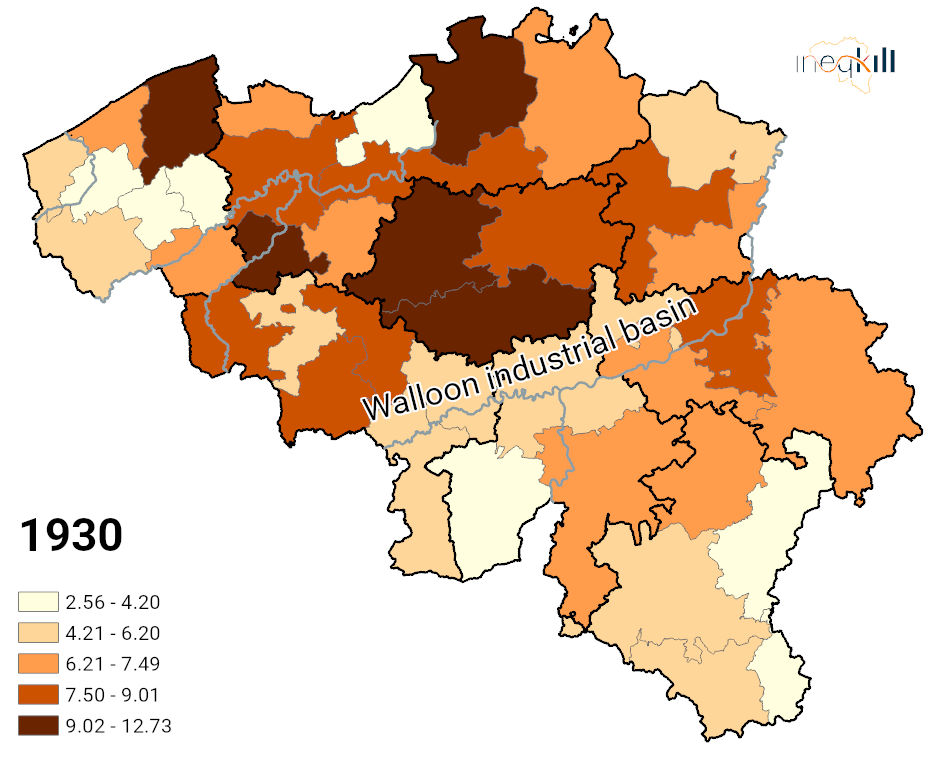
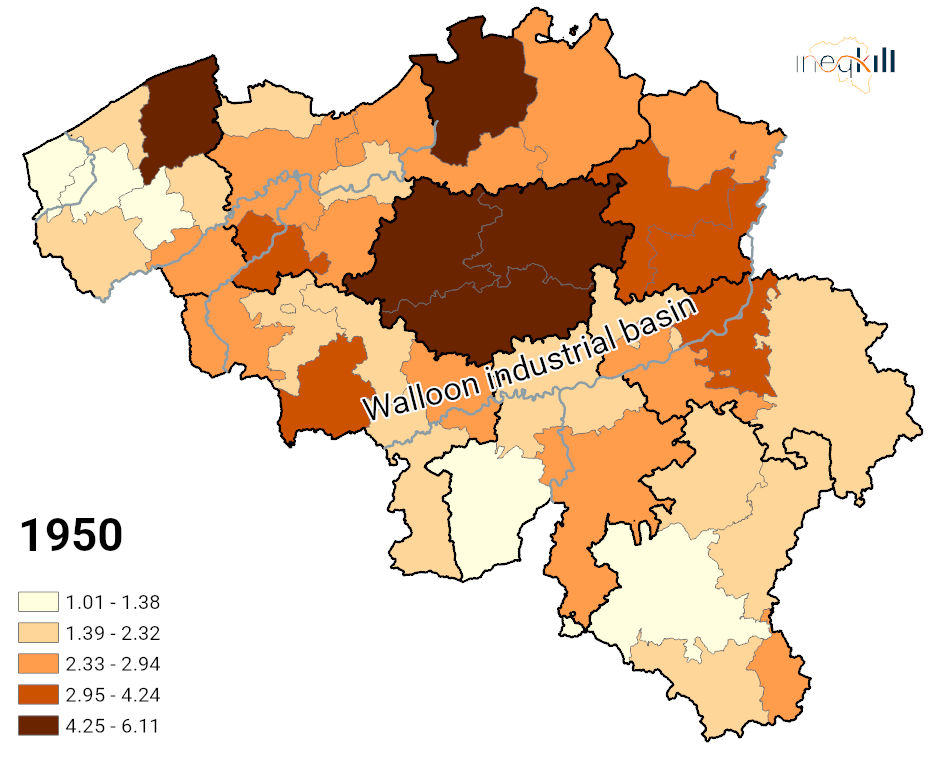
Figure 4: Mortality related to tuberculosis from 1890 to 1950 (%)
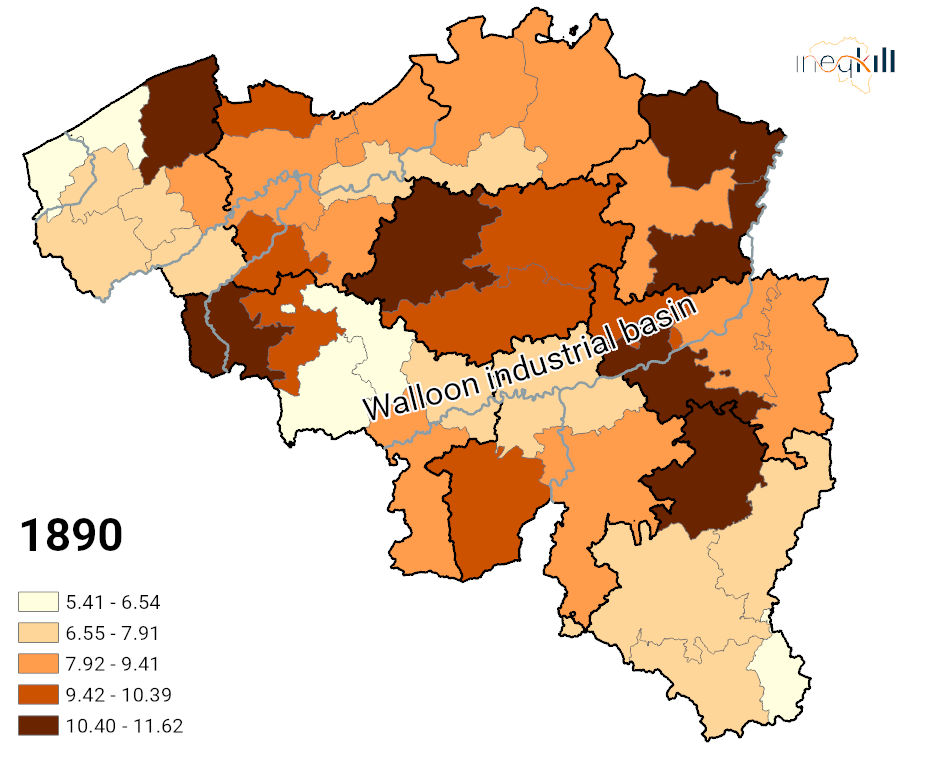
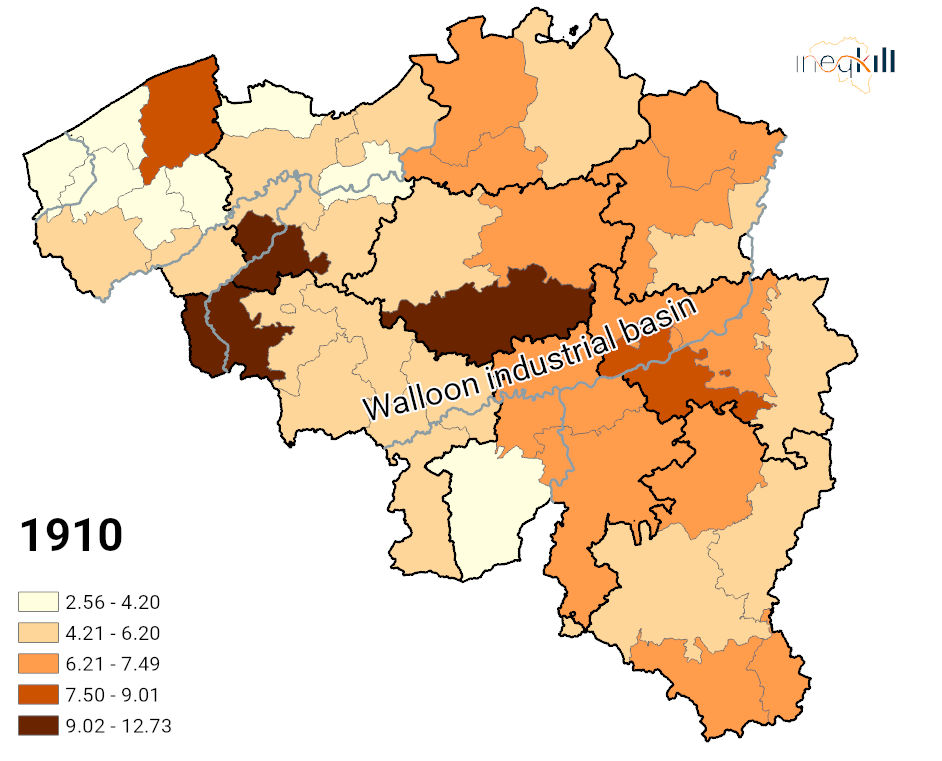
Source: State Archives Brussels, Mouvement de la population, 1890-1950; calculations by the authors.
The maps in Figure 4 show that tuberculosis was widespread across Belgium in the late 19th century, but the burden of the disease was not evenly distributed. In 1890, relatively high mortality rates were found throughout the country, although several urban districts—including Bruges, Brussels, and Leuven—stood out with particularly high death rates.
Cities offered ideal conditions for tuberculosis to spread. Overcrowded housing, poor sanitation, inadequate access to clean drinking water, and the accumulation of waste increased the risk of infectious diseases, while close contact and poor nutrition made people especially vulnerable.
In Flanders, however, high tuberculosis mortality was not confined to industrial centres. Some of the highest death rates were also found in poorer rural districts, particularly around Tongeren and Hasselt in the province of Limburg. This pattern reflects the severe economic hardship that followed the agricultural crisis and the collapse of the domestic textile industry during the 1840s and 1850s, when cheaper factory-made textiles undermined traditional rural industries. Widespread poverty, combined with poor nutrition and lower rates of breastfeeding—which may have reduced children’s resistance to infection—likely contributed to the high mortality observed in these regions.
By 1910, the geographical picture had begun to change. Overall tuberculosis mortality was declining, and the differences between districts became less pronounced. Very high mortality rates became less common and were increasingly confined to a smaller number of locations, while more districts moved into intermediate or lower mortality categories.
This trend continued after the World War I. By 1930, the geographical distribution of tuberculosis mortality had shifted again. Several districts that had previously experienced very high mortality showed clear improvements, although some areas continued to record relatively elevated death rates. These changing patterns reflect the gradual impact of better housing, nutrition, and public health measures, as well as a growing understanding of how tuberculosis could be prevented.
Who were the people most affected by tuberculosis? And did this change over time?
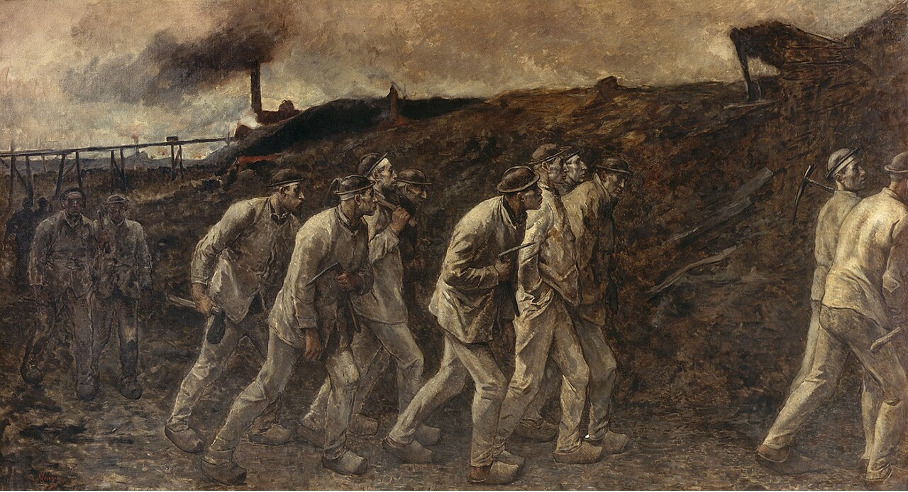
Figure 5: Return of the miners
Throughout history, both men and women were heavily affected by tuberculosis, but for different reasons. During the 19th century and the early decades of the 20th century, women—especially young women—appeared to be particularly vulnerable. Their higher risk was closely linked to their social circumstances. Women often had less access to nutritious food and healthcare, while pregnancy and childbirth placed additional demands on their health. In parts of Flanders, many young women also worked in the textile industry, where poorly ventilated factories, low wages, and widespread malnutrition favoured the spread of tuberculosis.
As the 20th century progressed, this pattern gradually changed. Tuberculosis mortality increasingly became concentrated among men, particularly during the second half of the century. One important reason was occupational exposure. Many traditionally male jobs—especially in mining and heavy industry—damaged the lungs and increased the risk of developing tuberculosis (Figure 5). This was particularly evident in the industrial regions of Wallonia, where tuberculosis remained more common among men than among women.
These changing patterns show that the impact of tuberculosis depended not only on biology, but also on the social and economic conditions in which people lived and worked.
The age profile of tuberculosis also changed over time. Between the 1930s and the early 1950s, the disease claimed most of its victims among adolescents and adults aged 15 to 54—the most economically active part of the population.
After the Second World War, however, tuberculosis mortality gradually shifted towards older age groups. By the 1950s, most people dying from tuberculosis were elderly.
Several factors help explain this change. Younger generations benefited from better nutrition, improved living conditions, advances in public health, and, later, more effective treatment, making them less likely to die from the disease. At the same time, Belgium’s population was ageing, increasing the number of older people who remained vulnerable to tuberculosis.
Occupational factors may also have played a role. Many older workers had spent decades in industries such as mining and heavy manufacturing, where prolonged exposure to dust and other harmful substances damaged the lungs. Combined with advancing age, these lifelong workplace exposures likely increased their susceptibility to tuberculosis and other respiratory diseases.
The changing age profile of tuberculosis therefore reflects both improvements in population health and broader demographic and social changes that transformed Belgian society during the 20th century.
Deaths from tuberculosis are strongly linked to poverty and industrialisation, but the position people occupied in society also shaped their risk. Tuberculosis was once the leading cause of death in Europe and a defining feature of 19th-century urban life. Its decline, driven by better living conditions, public health reform, and scientific discovery, marks one of humanity’s great public health successes.
Today, tuberculosis continues to thrive where poverty, overcrowding, and limited healthcare persist. Its history shows how deeply health is shaped by social and economic conditions, and how progress against disease depends not only on medicine, but also on equity.
Our publications
- Charlier, V., Devos, I., Eggerickx, T. & Vanwambeke, S.O. (2024). The geography of tuberculosis mortality in Belgium between 1889 and 1991: a descriptive analysis. Space, Populations, Societies, 2023/3-2024/1. (https://doi.org/10.4000/12tpr).
- Eggerickx, T., Sanderson, J.P., & Vandeschrick, C. (2020). Mortality in Belgium from nineteenth century to today, Quetelet Journal, 8(2), 7‑59. (https://doi.org/10.14428/rqj2020.08.02.01).
- Eggerickx, T., & Tabutin, D. (1994). La surmortalité des filles en Belgique vers 1890, Population, 49(3), 657-684. (https://doi.org/10.2307/1533962).
- Devos, I. (1996). La régionalisation de la surmortalité des jeunes filles en Belgique entre 1890 et 1910, Annales de démographie historique, 1996(1), 375‑407. (https://doi.org/10.3406/adh.1996.1928).
- Devos, I. (2006). Allemaal beestjes: mortaliteit en morbiditeit in Vlaanderen, 18de-20ste eeuw. Gent: Academia Press.
- Devos, I., & Van Rossem, T. (2015). Urban health penalties: estimates of life expectancies in Belgian cities, 1846-1908, Journal of Belgian History, 45(4), 74-109.
Read more
- Davies, P. D. O. (2005). Risk factors for tuberculosis. Monaldi Archives for Chest Disease, 63(1). (https://doi.org/10.4081/monaldi.2005.656).
- Deligne, C. (2016). Industrialisation, manure and water quality in the 19th century: the Senne river in Brussels as a case study. Water History, 8(3), 235‑255. (https://doi.org/10.1007/s12685-016-0163-0).
- Dyd, C., Lönnroth, K., Jaramillo, E., Williams, B., & Raviglione, M. (2009). Trends in tuberculosis incidence and their determinants in 134 countries. Bulletin of the World Health Organization, 87(9), 683‑691. (https://doi.org/10.2471/BLT.08.058453).
- Glaziou, P., Floyd, K., & Raviglione, M. (2018). Trends in tuberculosis in the UK. Thorax, 73(8), 702‑703. (https://doi.org/10.1136/thoraxjnl-2018-211537).
- Mackenbach, J.P. (2020). A history of population health: rise and fall of disease in Europe. Leiden: Brill Rodopi.
- Van Helden, P.D. (2003). The economic divide and tuberculosis: tuberculosis is not just a medical problem, but also a problem of social inequality and poverty, EMBO Reports, 4(S1). (https://doi.org/10.1038/sj.embor.embor842).
- Wanlin, M. (2018). Tuberculosis in Belgium before, during, and after World War II. In Progress in Respiratory Research (pp. 144-151). Bazel: S. Karger AG. (https://doi.org/10.1159/000481482).
- World Health Organization. (2024). Global tuberculosis report 2024: 1.2 TB mortality (retrieved September 7, 2026 from https://www.who.int/teams/global-programme-on-tuberculosis-and-lung-health/tb-reports/global-tuberculosis-report-2024/tb-disease-burden/1-2-tb-mortality).
Data sources
- Annuaire statistique de la Belgique, 1870-1978.
- Documents statistiques publiés par le Département de l’intérieur, 1857-1869.
- Exposé de la situation du royaume, 1851-1860, 1861-1875, 1876-1900.
- State Archives Brussels, Mouvement de la population et de l’état civil, 1890-1950.