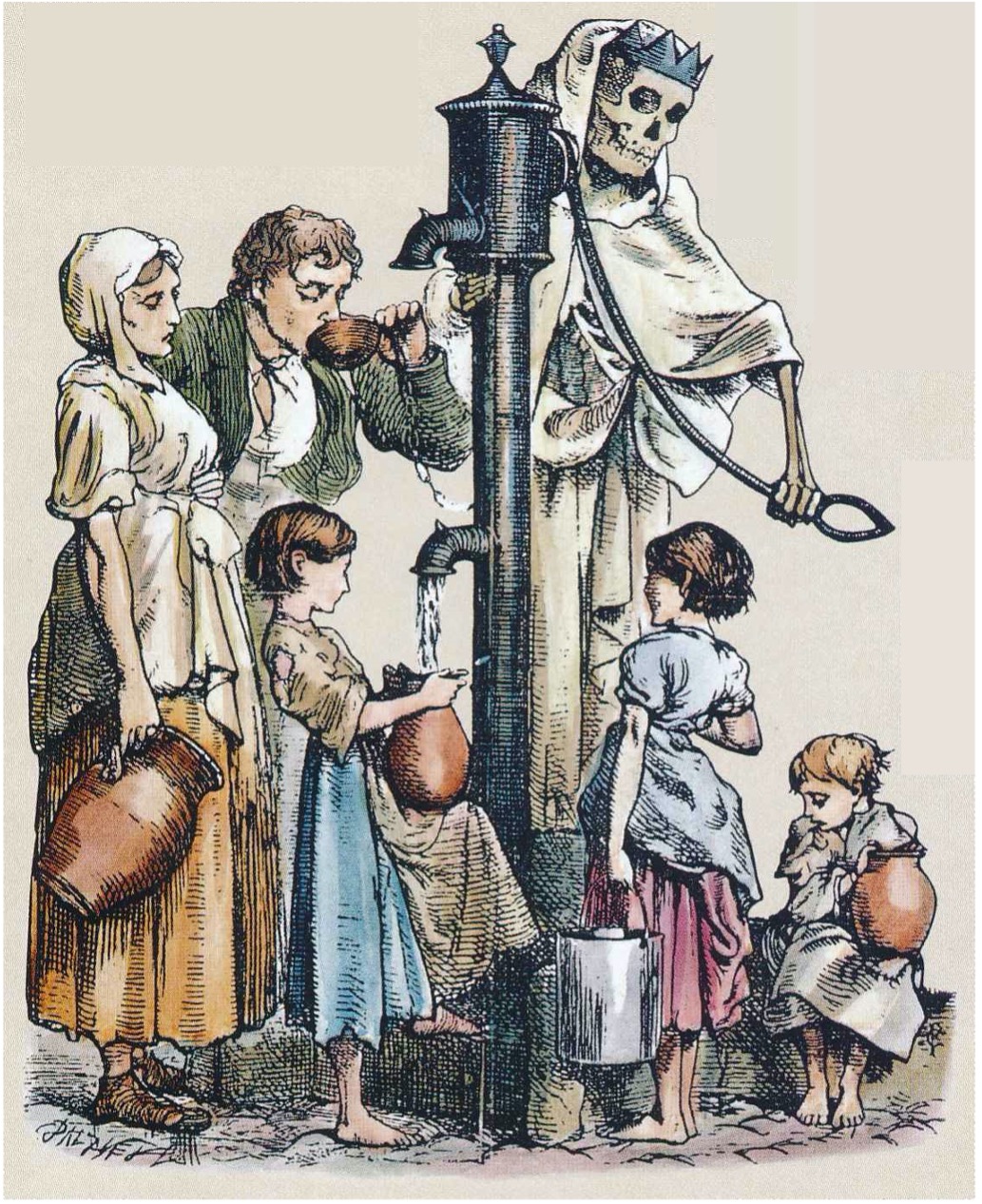
What is killing people in Belgium?
Step into two centuries of Belgian history through the most universal human experience: mortality.
This atlas compiles an unprecedented collection of data spanning from 1820 to 2025, revealing how and why people died and how these patterns varied across regions, social groups, and eras.
Travel through time as you explore:
- Interactive maps that show where mortality hit hardest — and where survival improved fastest.
- Dynamic charts tracing the rise and fall of infectious diseases, chronic illnesses, accidents, and other causes of death.
- Insightful articles that unpack how living conditions, sanitation, occupational risks, public health measures, and medical innovations reshaped the Belgian health landscape.
From cholera outbreaks in the 19th century to modern epidemics of cancer and cardiovascular disease, from poor urban workers to affluent suburbs — this atlas uncovers how mortality is never just biology. It reflects inequality, environment, politics, culture, and progress.
Why This Matters
Despite Belgium’s rich historical data, a crucial part of our health story remains unclear: we still don’t know how mortality inequalities evolved through time.
Key questions remain unanswered:
- When did mortality inequalities first emerge?
- How did they evolve as infectious diseases declined and chronic illnesses rose?
- Who benefited earliest from public health improvements — and who lagged?
- How did social and spatial divides shape survival across different eras?
Understanding these long-term patterns is essential. By tracing how inequalities originated and transformed over time, we gain insight into the roots of today’s health disparities — and into the policies and conditions needed to reduce them.
What is killing people in Belgium?
This atlas presents data on social and spatial inequalities in mortality in Belgium from 1820 to 2025.
Explore maps, charts, and articles about how causes of death and mortality inequalities changed over time.
Discover how mortality and cause-of-death patterns have changed in relation to living conditions, public health measures, and medical progress.
Dive into Belgium's mortality history
Explore articles about the historical and spatial evolution of diverse causes of death in Belgian history. When and where did diseases and causes of death kill the most people, who did they kill, and why?
Suicide
Flu
Heart Disease
Cancer
Discover the darkest pages in Belgian history
Several major epidemics have hit Belgium over the past 200 years. Discover which were the deadliest.
The Ineqkill Digital Atlas of Health Inequalities in Belgium provides detailed information about mortality and diseases in Belgium from 1820 to 2025.
Explore
- Topics
- Diseases
- Data
About
- Ineqkill Research Project
- Mission Statement
- Sources
- Team
- FAQ's
Contact
Vrije Universiteit Brussel
Pleinlaan 5 (Room 2.17)
1050 Brussels, Belgium
e-mail: sylvie.gadeyne@vub.be