
Born without life
A history of stillbirth in Belgium
By Tom Hacha
In 2023, around 1.9 million babies were stillborn worldwide, or one every 17 seconds. Nearly 80% of these deaths occurred in sub-Saharan Africa and Southern Asia. In Belgium, by contrast, slightly more than 500 babies were stillborn in 2023. Seen from a historical perspective, this lower number highlights how improvements in medicine, obstetrics and maternal care have greatly reduced the risk of stillbirth over the past century.
In Belgium during the 19th century, stillbirth was far more common than it is today, yet it often remained hidden from public view, surrounded by silence and stigma. Between the start of national statistics in 1841 and 2023, more than 820,000 births were registered as stillbirths in Belgium.
How did this decline come about, and did all families benefit equally? This article traces the history of stillbirth in Belgium since the 19th century, exploring how it changed over time and varied across regions and social groups.
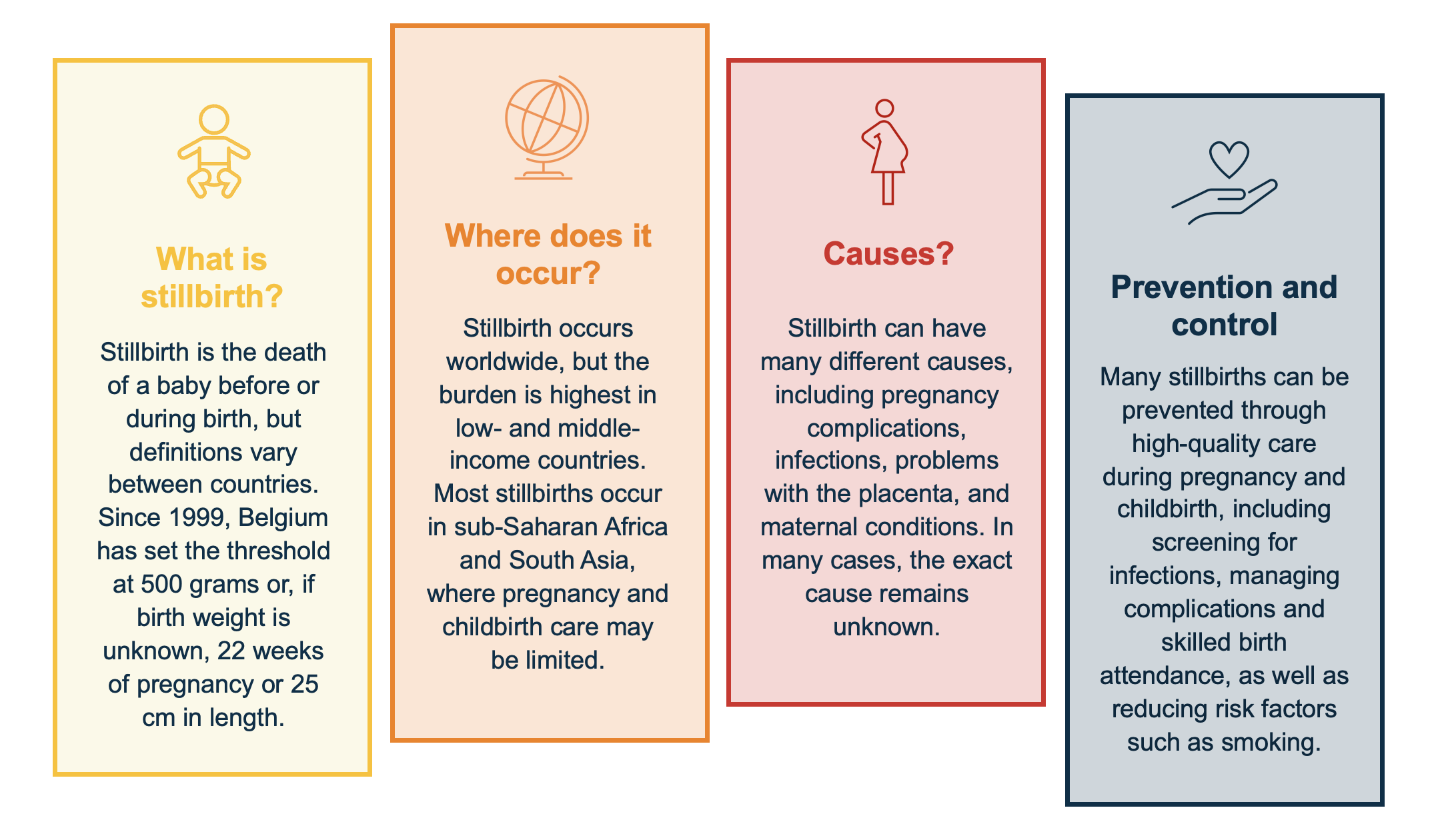
What is stillbirth?
What is stillbirth?
Stillbirth is the death of a baby before or during birth, but definitions vary between countries. Since 1999, Belgium has set the threshold at 500 grams or, if birth weight is unknown, 22 weeks of pregnancy or 25 cm in length.
Where does it occur?
Stillbirth occurs worldwide, but the burden is highest in low- and middle-income countries. Most stillbirths occur in sub-Saharan Africa and South Asia, where pregnancy and childbirth care may be limited.
Causes
Stillbirth can have many different causes, including pregnancy complications, infections, problems with the placenta, and maternal conditions. In many cases, the exact cause remains unknown.
Prevention and control
Many stillbirths can be prevented through high-quality care during pregnancy and childbirth, including screening for infections, managing complications and skilled birth attendance, as well as reducing risk factors such as smoking.
A brief history
Stillbirth itself is as old as humanity, yet for centuries it remained largely hidden from view and was often surrounded by silence and stigma. It is almost impossible to know how common stillbirth was before the 19th century, since birth registration in Europe was closely connected to baptism. As stillborn babies could not be baptised, they were often absent from the parish records that historians use to reconstruct past populations. This also affected burial practices, as unbaptised stillborn babies could generally not be buried in consecrated cemetery ground. The religious importance of baptism continued well into the 19th century. In Belgian maternity hospitals, “emergency baptism” was still common practice during difficult deliveries when there was a risk that the child might die before receiving the sacrament.
At the same time, stillbirth was becoming increasingly visible to doctors and public authorities. Under French rule, the civil registration of stillbirths was introduced in the Belgian territories in 1806. In the 1830s, the Belgian statistician Adolphe Quetelet observed that stillbirths were considerably more common among male foetuses and in cities. Yet the causes of stillbirth remained poorly understood, and contemporary explanations often carried strong moral judgements. Responsibility was frequently placed on the mother herself. Stillbirth could raise suspicions of an attempted abortion, for example as a way of concealing an illegitimate pregnancy, or unhealthy maternal behaviour during pregnancy such as heavy physical labour.
Figure 1: Mourning mother

Over the course of the 19th and 20th centuries, stillbirth was increasingly approached as a medical and public-health problem rather than primarily a religious or legal one. This changing perspective also influenced the organisation of childbirth and led to stricter regulation about who could assist women during childbirth. Until well into the 19th century, women in the countryside relied on traditional female birth attendants (locally known as achterwaarsters or bakers), while formally trained midwives became more common from the late 18th century onwards, first in towns and later also in rural areas. Wealthier families could also call on physicians to assist during childbirth. Poor urban women, meanwhile, could receive free assistance from midwives through municipal charity services with a doctor called in if complications arose, as was the case in Antwerp and Brussels.
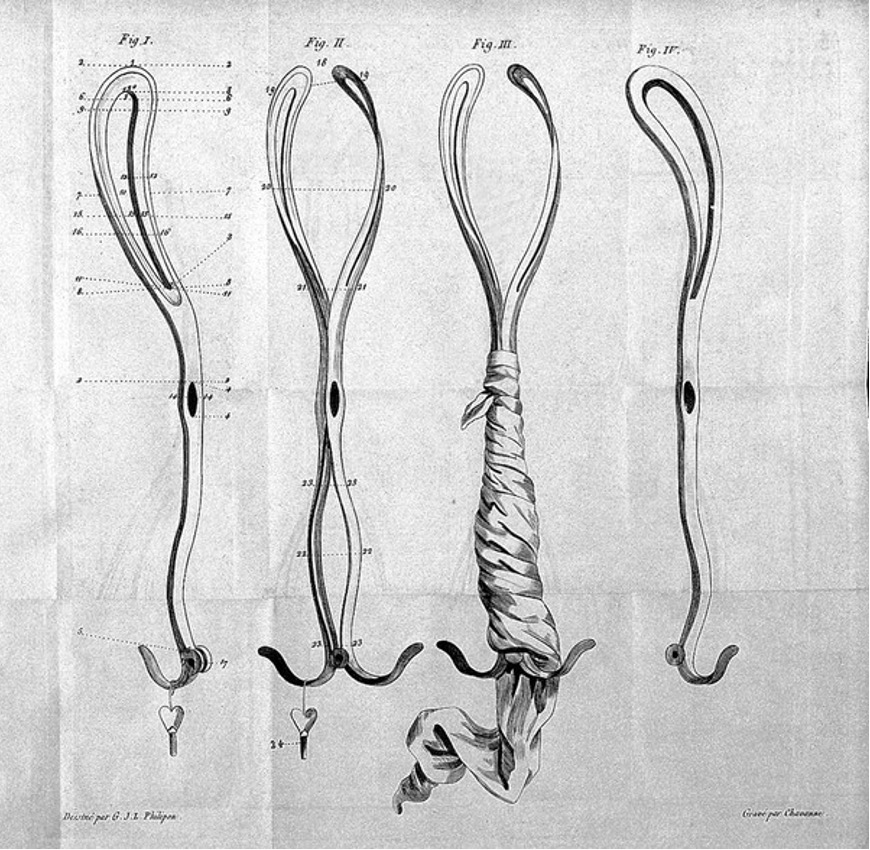
This growing involvement of doctors brought with it a wider range of obstetric interventions and new forms of pain relief. Yet medical involvement did not necessarily make childbirth safer for either mother or child. Before effective antiseptic and aseptic practices became widespread in the late 19th century, doctors could unwittingly transmit infections between patients through their hands or instruments. Invasive obstetric procedures, including the growing use of forceps could increase the risk of infection when adequate hygiene was lacking. New forms of pain relief also carried risks. Chloroform which came into obstetric use from the mid-19th century onwards, was difficult to administer safely and in excessive doses could endanger mother and child.
During the 20th century, doctors and other medical professionals became increasingly involved in pregnancy and childbirth. Prenatal care expanded, and childbirth gradually moved from home to maternity hospitals. Medical interventions also became much safer. Caesarean sections, for example, were still risky at the beginning of the century, but advances in surgery, anaesthesia and infection control greatly improved their safety, especially after the Second World War.
Figure 2: Obstetric forceps, used to assist childbirth in complicated deliveries
Trends over time
Belgium has one of the world’s longest running series of stillbirth statistics, dating back to 1841. These figures, however, should be interpreted with caution, as definitions and registration practices changed over time.
Under a law introduced in 1806, babies were registered as stillborn not only if they were born dead (“true’ stillbirths), but also if they were born alive but died before a birth certificate could be drawn up. These latter cases were known as “false” stillbirths. Figure 3 shows that, until 1849, the number of (true and false) stillbirths per 1,000 total births was particularly high, at around 40 per 1,000 births (blue dotted line). At the time, there was also no minimum length of pregnancy for registering a stillbirth. As a result, these early figures could include pregnancy losses that would today be classified as miscarriages.
This changed in 1849, when registration was limited to pregnancies lasting at least 180 days and true stillbirths were recorded separately from false stillbirths (yellow line). Recorded stillbirths subsequently fell to around 35 per 1,000 births in the 1850s. Between 1867 and 1878, however, the distinction between true and false stillbirths disappeared again from the published statistics, making the figures less comparable over time. From the late 19th century onwards, rates stabilised at around 35 to 40 per 1,000 births.
Stillbirths showed a remarkable peak in the years immediately following the First World War. Belgian demographer Luc Delanghe suggested that the difficult conditions following the war played an important role. Poverty and food shortages affected many families, while healthcare services had also been disrupted. Changes in the pattern of births may have contributed as well. Marriages postponed during the war may have resulted in a relatively large number of first births afterwards, which carry a higher risk of stillbirth. Similar factors could also have played a role in the smaller peak in stillbirths after the Second World War.
Figure 3: Number of stillbirths per 1,000 total births in Belgium, 1841–2023
The dotted blue line indicate periods when the statistics did not distinguish between “true” and “false” stillbirths. No data are available for the war years 1914–1918. Source: State Archives Brussels, Mouvement de la population, 1841-1957; STATBEL, 1958-2023; calculations by the author.
Figure 4: Prenatal consultation

After the peak that followed the First World War, stillbirths began to decline steadily in the 1920s. Belgium was one of the few countries where this decline had already begun before stillbirths started falling more widely across Europe from the late 1930s onwards. This earlier decline may have been related to the growing medical attention to pregnancy and childbirth. After the First World War, free prenatal consultations were introduced across the country, giving more women access to medical supervision during pregnancy (Figure 4). These check-ups helped to identify complications and risk factors and to provide advice and care that could help protect mother and child.
The decline accelerated from the late 1930s onwards, at roughly the same time as in most other European countries. This was the period when the first antibacterial drugs became available: prontosil in the late 1930s, followed by penicillin in the late 1940s. By making maternal infections easier to treat, these drugs reduced the risks associated with pregnancy and childbirth. They also helped make obstetric interventions such as caesarean sections safer, allowing doctors to intervene more often in difficult deliveries.
Stillbirth rates continued to fall over the following decades, eventually reaching an all-time low of around 3.9 per 1,000 births in 2005. Since then, however, this long decline has levelled off, with stillbirth rates gradually rising again in recent years.
Geographical patterns
Figure 5: Stillbirths per 1,000 total births by municipality in Belgium, 1841-1850
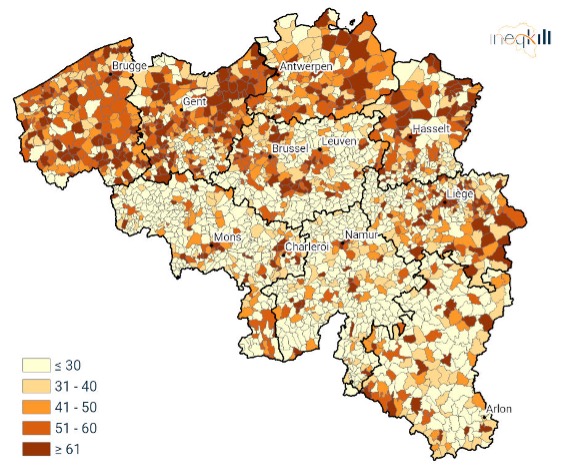
These national figures hide large regional differences. One striking pattern was the contrast between cities and the countryside. As early as the 19th century, Adolphe Quetelet and his colleague Edouard Smits found that in West Flanders, stillbirth rates were almost twice as high in cities as in rural areas. Unsure why, they wondered whether the urban fashion for corsets and the habit of women tightly lacing their bodies might help explain the difference. Given the scale of the urban disadvantage, however, other factors were likely at play. The unhealthy living and working conditions experienced by many pregnant women may have increased the risks faced by pregnant women in cities. The higher proportion of unmarried mothers in cities may also have contributed. Cities attracted unmarried pregnant women from surrounding areas, and unmarried mothers faced a substantially higher risk of recorded stillbirth.
There were also striking differences between Flanders and Wallonia. In 1841-1850, the number of stillbirths per 1,000 births was considerably higher in Flanders than in Wallonia, particularly in West and East Flanders and parts of Antwerp and Limburg (see Figure 5). By 1909-1911, however, this pattern had reversed, with stillbirths becoming more common in Wallonia (see Figure 6).
Figure 6: Stillbirths per 1,000 total births by municipality in Belgium, 1909-1911
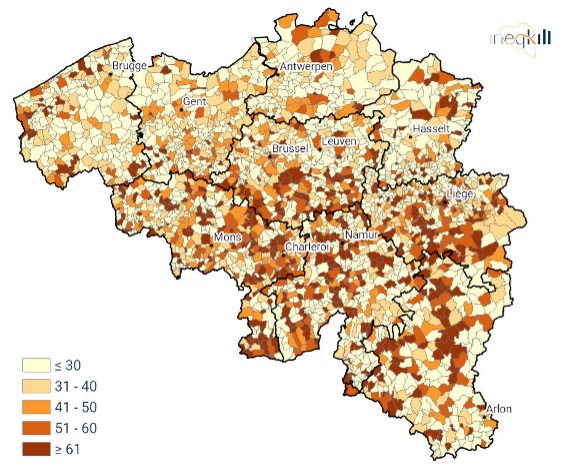
The reasons for these remarkable differences between Flanders and Wallonia in the 1840s remain unclear. One possible explanation for the particularly high figures in the provinces of West and East Flanders is the severe poverty that affected the region. The crisis of the linen industry and food shortages caused by repeated potato harvest failures left many families struggling to survive. As traditional linen work disappeared, women increasingly had to seek other sources of income, often involving physically demanding work outside the home. Combined with poor nutrition and difficult living conditions, this may have increased the risk of stillbirth.
Yet regional differences in recorded stillbirths may not reflect differences in foetal mortality alone. Registration practices and attitudes towards unmarried motherhood may also have played a role. Research by demographer Masuy-Stroobant has suggested that the lower stillbirth figures in predominantly Catholic Flanders around the turn of the 20th century may partly reflect stronger social and religious stigma surrounding unmarried motherhood. Because unmarried mothers had a particularly high risk of recorded stillbirth, differences in the frequency and registration of births outside marriage could affect regional stillbirth rates. In the more industrialised south, where it appears to have been less strongly stigmatised, such births may have been more likely to enter the official records.
Religion played an important role as well. In Catholic Flanders, ‘emergency baptism’ was more common. When it was unclear whether a newborn had been born alive, the desire to have the child baptised may have encouraged those present at the birth to report signs of life. The baby would then be registered as a live birth rather than a stillbirth. This may partly explain the lower recorded stillbirth figures in Flanders.
The changing social pattern of stillbirth
Figure 7: Factors associated with inequalities in stillbirth

Stillbirth does not affect all families equally. Even today, despite widespread access to high-quality care during pregnancy and childbirth, substantial differences exist between socioeconomic groups. In Belgium, between 2015 and 2019, the number of stillbirths per 1,000 births was about 63% higher higher among the lowest socioeconomic group than among the highest. These inequalities reflect a complex mix of factors, including differences in access to healthcare, risk behaviours such as smoking and unhealthy nutrition, and biological factors such as the mother’s age and body weight.
International studies have documented social differences in stillbirth since at least the 1930s. Much less is known, however, about earlier periods. Were such inequalities already present before stillbirth rates began to fall, or did they emerge because wealthier families benefited earlier from medical improvements in pregnancy and childbirth? The Antwerp cause-of-death registers offer a rare opportunity to look further back in time. By linking individual stillbirths to information about the social position of their parents, we can trace social differences in stillbirth mortality over more than a century. Between 1820 and 1923, around 22,000 stillbirths were recorded in Antwerp, compared with approximately 525,000 live births over the same period. This means that over the entire period, around 41 per 1,000 total births, or 4.1%, were registered as stillbirths.
Figure 8: Percentage of births that were stillborn, by social class and period, Antwerp, 1820-1923
Source: Felixarchief Antwerp, Cause-of-death registers; Quetelet Center, Database S.O.S. Antwerp; calculations by the author.
The risk of stillbirth was not the same for everyone, and these social differences changed considerably over time. In the first half of the 19th century, stillbirth was common across all social groups in Antwerp, accounting for around 5 to 7% of births. Unskilled workers had the highest proportion, with around one stillbirth for every 14 births. Yet there was no simple divide between rich and poor. Stillbirth was also relatively common among elite women, at around 1 in every 16 births. The lower middle class, by contrast, fared considerably better, with around 1 stillbirth in every 19 births. The relatively high risk among elite families may seem surprising. One possible explanation is their greater reliance on physicians during childbirth, at a time when medical intervention could itself still carry high risks of infection and injury.
Over the following decades, however, a clearer social divide emerged. Stillbirth became less common in most groups, but the decline was faster among the middle and higher social groups. By 1909–1923, almost 5% of births among unskilled and farm workers were stillbirths, equivalent to around 1 in every 21 births. Among the other social groups, the figure was around 3.5%, or 1 in every 29 births.
By the early 20th century, the chances of a healthy birth had thus become increasingly shaped by the social circumstances into which a child was born. This growing divide probably reflected differences in living and working conditions, nutrition and maternal health, but also unequal access to the expanding medical care available during pregnancy and childbirth. As maternity care improved, middle- and upper-class families may have been better placed to benefit from these changes, while poorer families continued to face many of the risks that had made stillbirth so common in the 19th century.
Literature
- Delanghe, L. (1971). Differentiële sterfte in België: een sociaal-demografische analyse. Leuven: KUL, unpublished doctoral dissertation.
- Hacha, T., & Devos I. (forthcoming). Between birth and death: historical trends and social inequalities in stillbirth mortality in the city of Antwerp, Belgium, 1820-1923.
- Løkke, A. (2012). The antibiotic transformation of Danish obstetrics: the hidden links between the decline in perinatal mortality and maternal mortality in the mid-twentieth century. Annales de démographie historique 123(1), 205-224.
- Masuy-Stroobant, G. (1983). Les déterminants individuels et régionaux de la mortalité infantile: la Belgique d’hier et d’aujourd’hui. Louvain-la-Neuve: UCL, unpublished doctoral dissertation.
- Matthys, C., & Gryson, S. (2018). Het spanningsveld van de reproductieve gezondheidszorg: vroedvrouwen, artsen en achterwaarsters in Vlaanderen tijdens de 19de eeuw. Belgisch tijdschrift voor nieuwste geschiedenis, 48(3), 65-87.
- Woods, R. (2009). Death before birth: fetal health and mortality in historical perspective. Oxford: University Press.
Data sources
- Felixarchief Antwerp, Cause-of-death registers, 1820-1946.
- Ghent University – Quetelet Center, Database S.O.S. Antwerp.
- State Archives Brussels, Mouvement de la population et de l’état civil, 1888-1976.
- STATBEL, Databases Mortality, 1969-2023.