
Two centuries of heart disease in Belgium
By Lise Bevernaegie
Today, cardiovascular disease is more common among people with lower incomes or lower levels of education. Limited access to healthcare, combined with factors such as unhealthy diets, smoking, chronic stress, and fewer opportunities for physical activity, increases the risk of developing heart disease and dying from it.
Two centuries ago, the picture was very different. In the 19th century, heart disease was often regarded as a disease of the wealthy, associated with rich diets, sedentary lifestyles, and the pressures of business and political life.
How did this remarkable reversal occur? The answer lies not only in changing lifestyles but also in advances in medical knowledge and improvements in the way causes of death were diagnosed and recorded. By tracing two centuries of Belgian mortality data, we can see how these developments transformed the geography and social distribution of heart disease.
Today, public health measures such as smoking bans, healthier food policies, and campaigns promoting physical activity aim to reduce the burden of cardiovascular disease and improve heart health across the whole population.
Image: Heart Drawing, by Thomas Godart (source: Wellcome Collection).
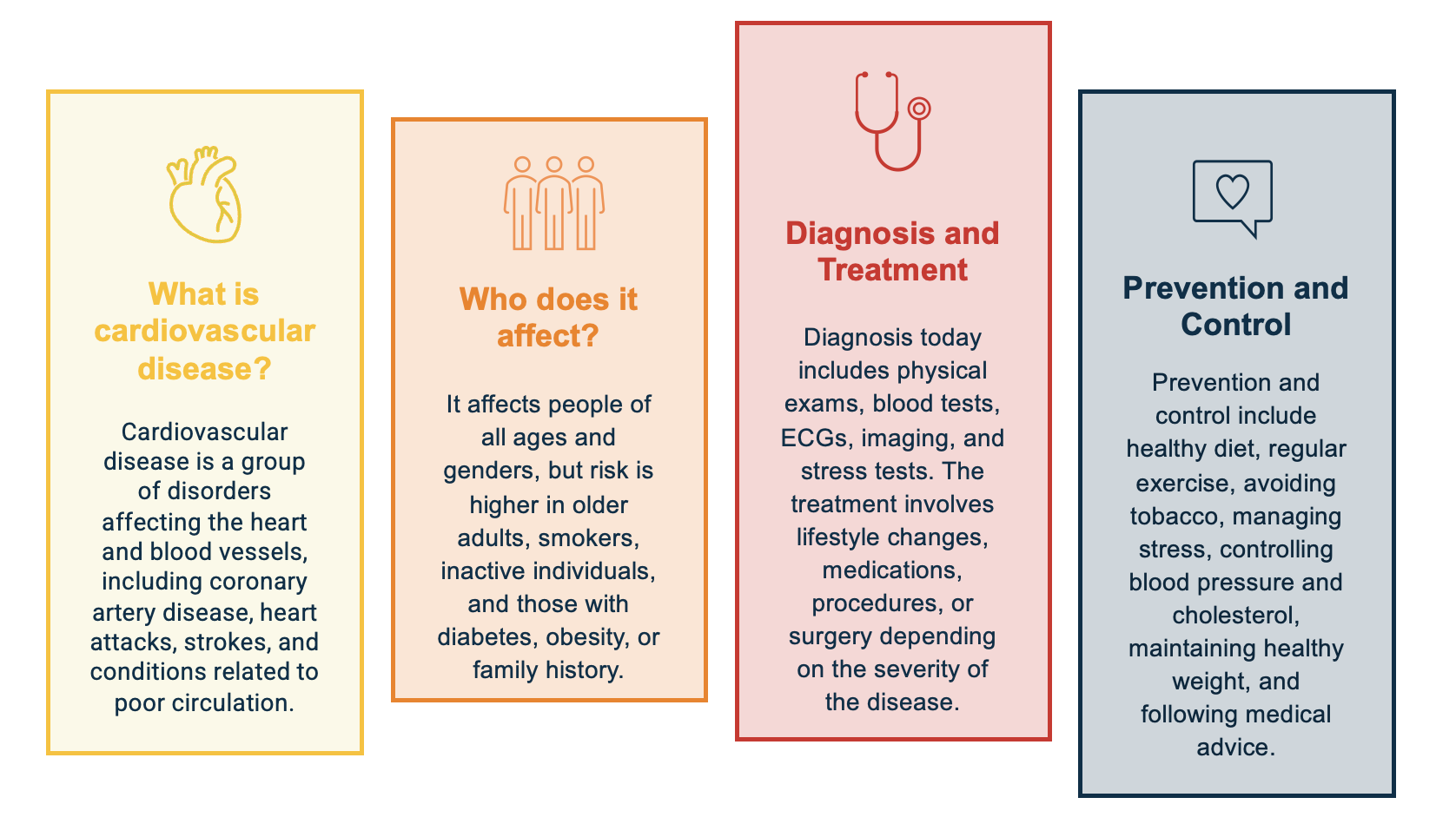
What is cardiovascular disease?
What is cardiovascular disease?
Cardiovascular disease is a group of disorders affecting the heart and blood vessels, including coronary artery disease, heart attacks, strokes, and conditions related to poor circulation.
Who does it affect?
It affects people of all ages and genders, but the risk is higher in older adults, smokers, inactive individuals, and those with diabetes, obesity, or family history of heart disease.
Diagnosis and Treatment
Diagnosis today includes physical exams, blood tests, ECGs, imaging, and stress tests. Treatment depends on the type and severity of the condition and involves lifestyle changes, medications, or surgery.
Prevention and Control
Prevention and control include healthy diet, regular exercise, avoiding tobacco, managing stress, controlling blood pressure and cholesterol, maintaining healthy weight, and following medical advice.
A brief history
Figure 1: The first stethoscope

The story of cardiovascular disease stretches back thousands of years. Around 400 BCE, the Greek philosopher Plato described the heart as the body’s centre of emotion and sensation, responding to events both inside and outside the body. Centuries later, in the 17th century, the English physician William Harvey discovered how blood circulates through the body, laying the foundations of modern cardiology.
Even then, heart disease remained difficult to diagnose. Unlike infectious diseases or traumatic injuries, heart conditions develop inside the body and often leave few visible signs. Before the invention of modern diagnostic tools, doctors frequently struggled to determine whether someone had died from a heart condition or from another illness.
During the 19th and early 20th centuries, a series of medical innovations gradually made the hidden workings of the heart visible. In 1816, the French physician René Laennec invented the stethoscope (Figure 1), allowing doctors to listen to heart sounds. In 1865, the sphygmograph made it possible to record the pulse objectively. Finally, in 1902, the Dutch physiologist Willem Einthoven developed the electrocardiogram (ECG), enabling doctors to measure the heart’s electrical activity and diagnose rhythm disorders.
Together, these breakthroughs transformed the diagnosis of heart disease. They made it increasingly possible to recognise cardiovascular conditions accurately, although effective ways to prevent and treat them would only emerge much later.
The rise and fall of heart disease
In the 19th century, relatively few people in Belgium died from heart disease (Figure 2). During the 20th century, however, cardiovascular disease became one of the country’s leading causes of death, following a pattern seen across much of Western Europe.
When Belgium began recording causes of death in 1851, around 15 people per 10,000 inhabitants died from cardiovascular disease each year. By the 1970s, this had risen to 54 deaths per 10,000 inhabitants. After reaching this peak, mortality began a long-term decline.
The trend, however, was not completely smooth. One striking feature is a sudden change in the late 1960s. Similar patterns can be observed in several other European countries and are largely explained by changes in the International Classification of Diseases, the international system used to classify causes of death.
When a new version of the ICD was introduced in 1969, conditions such as stroke and other cerebrovascular diseases were classified as cardiovascular diseases, while arteriosclerosis was also reclassified. As a result, the statistics changed—not because people’s health suddenly deteriorated, but because doctors were recording causes of death differently.
This illustrates an important lesson when interpreting long-term health trends: changes in medical knowledge and disease classification can influence the numbers just as much as changes in the diseases themselves.
Figure 2: Deaths from cardiovascular disease per 100.000 inhabitants, Belgium, 1851-2020
Source: Documents statistiques and Annuaire statistique, 1851-1869; State Archives Brussels, Mouvement de la population, 1888-1953; STATBEL, 1954-2020; calculations by the author.
Figure 3: Men's smoking behaviour increased their risk of heart disease

For much of the 20th century, men were more likely than women to die from heart disease (Figure 3). This was largely because they were more exposed to important risk factors. Men smoked more, consumed more alcohol, and were more likely to work in physically demanding or stressful jobs, as well as in heavy industries where exposure to dust and air pollution increased the risk of cardiovascular disease.
From the 1980s onwards, however, women accounted for more deaths from cardiovascular disease overall. This does not mean that women suddenly became more vulnerable than men. Rather, women tend to live longer, and heart disease is primarily a disease of older age. As more women reached advanced ages, a larger number eventually died from cardiovascular disease.
The rise of heart disease during the 20th century is therefore closely linked to one of society’s greatest health successes: people began living longer. In the 19th century, many people died young from infectious diseases, poor sanitation, or violence. Because cardiovascular disease usually develops over decades, relatively few people survived long enough to experience it. As living conditions improved and life expectancy increased, more people reached the ages at which heart disease becomes common.
Figure 4: Belgian ambulance in 1970

Since the 1970s, deaths from heart disease have declined sharply in Belgium, following a trend seen across much of the Western world. This remarkable improvement is the result of both better prevention and better treatment.
Researchers gained a much clearer understanding of the major risk factors for cardiovascular disease, including smoking, high blood pressure, and high cholesterol. This knowledge led to public health campaigns that encouraged people to stop smoking, eat healthier diets, and become more physically active.
Medical care also improved dramatically. New medicines made it possible to control blood pressure and cholesterol more effectively, while advances such as bypass surgery, stents, and heart transplantation greatly increased the chances of surviving serious heart disease.
Emergency care became faster and more effective as well. Improvements in ambulance services, emergency telephone systems, and life-saving techniques such as cardiopulmonary resuscitation (CPR) and defibrillation meant that many more people survived heart attacks than in previous decades. From the late 1970s onwards, Belgium also introduced specialised mobile emergency units and helicopter services, helping patients receive rapid treatment even in more remote parts of the country.
Together, these advances transformed cardiovascular disease from one of the country’s leading killers into a condition that is increasingly preventable and treatable.
The geography of heart disease
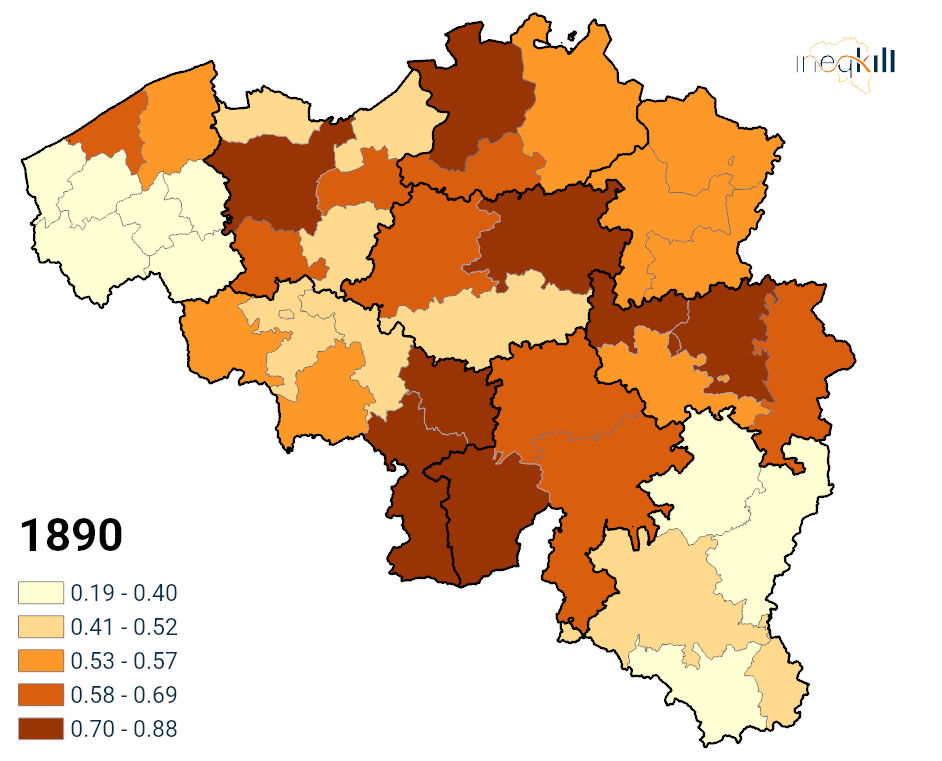
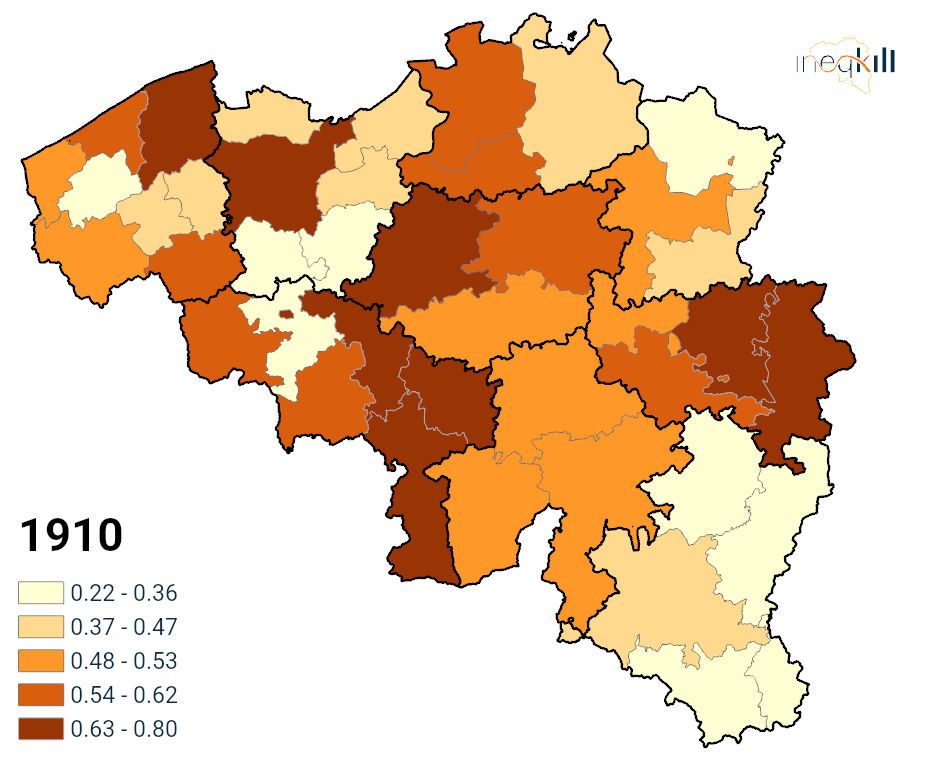
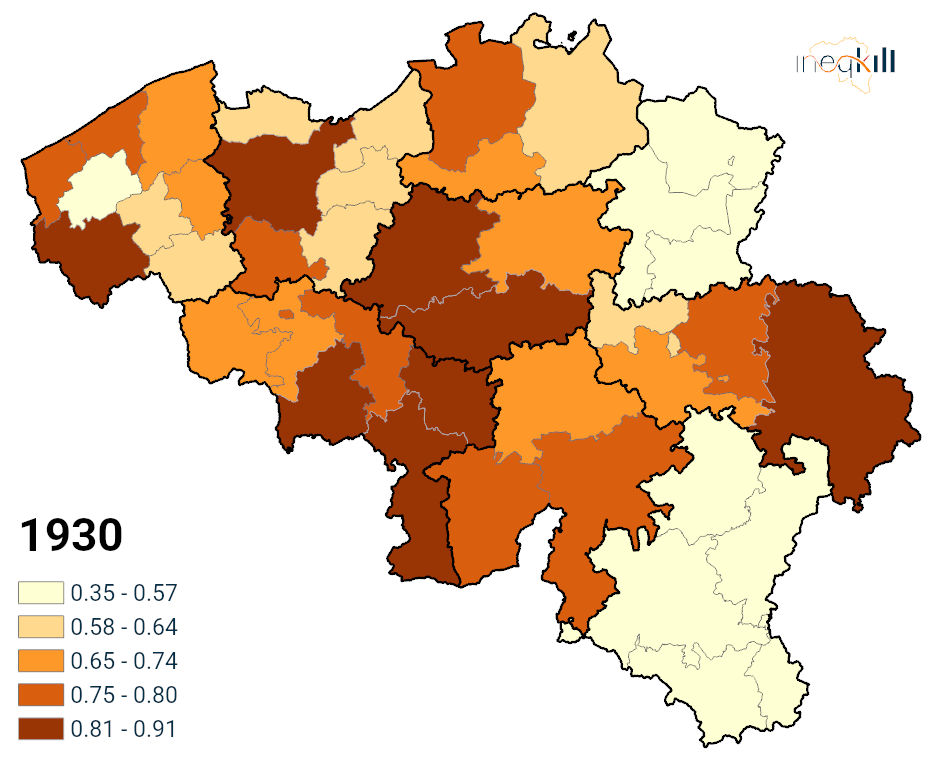
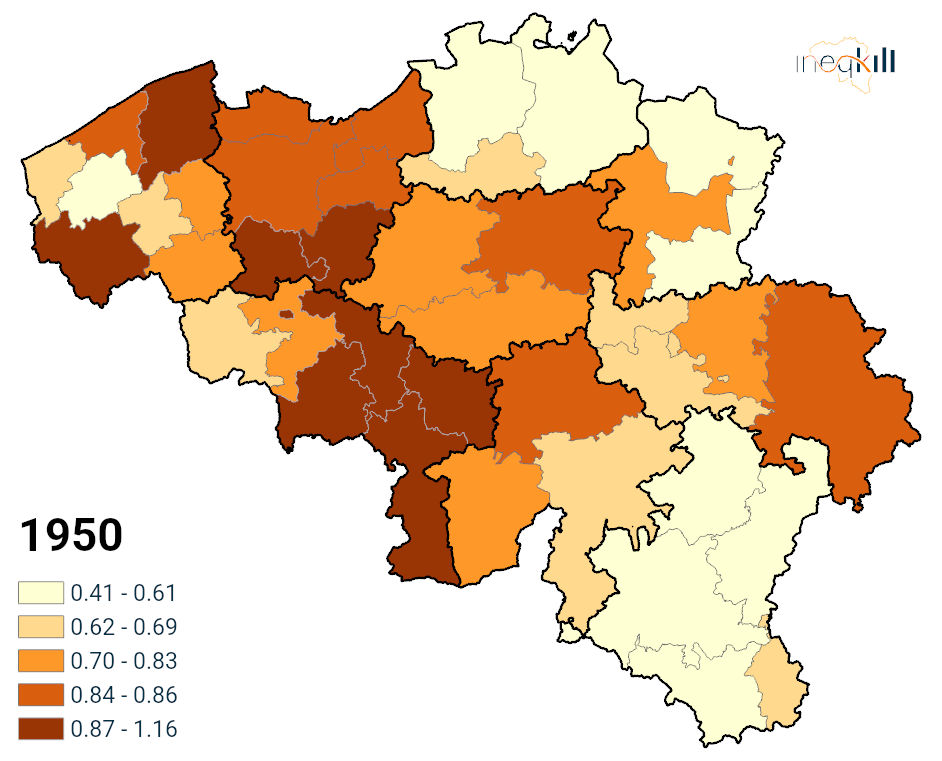
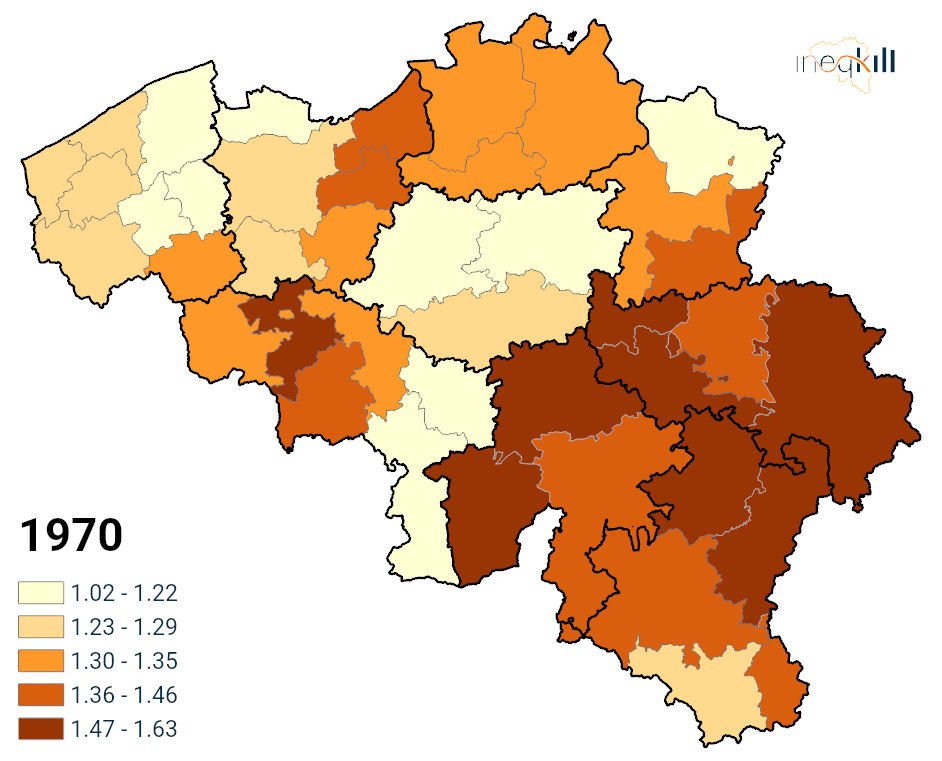
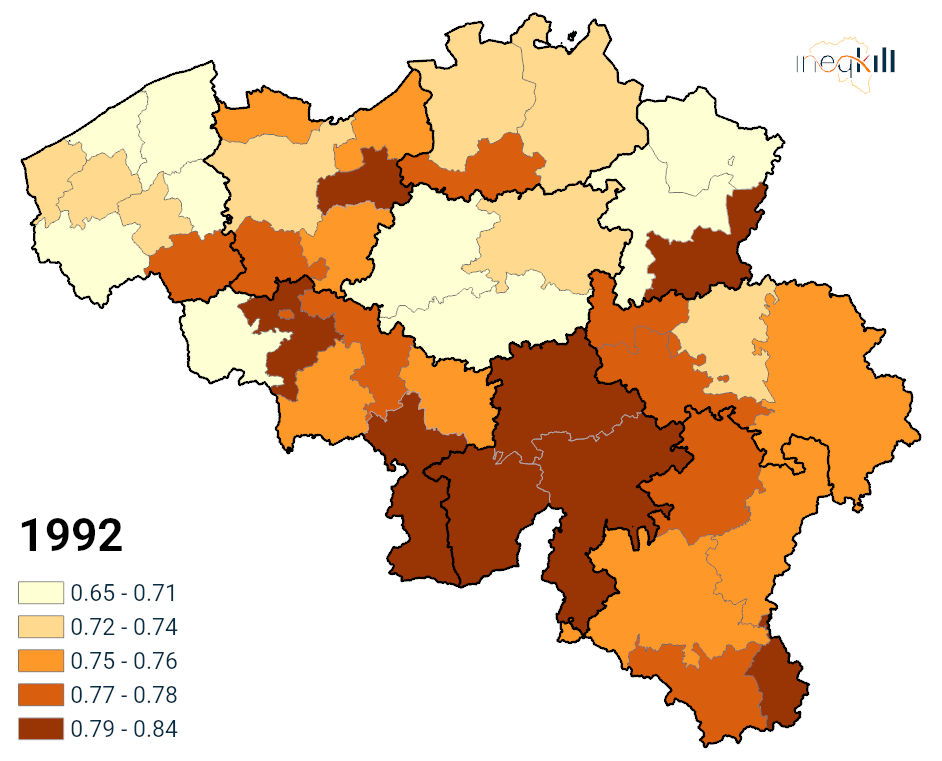
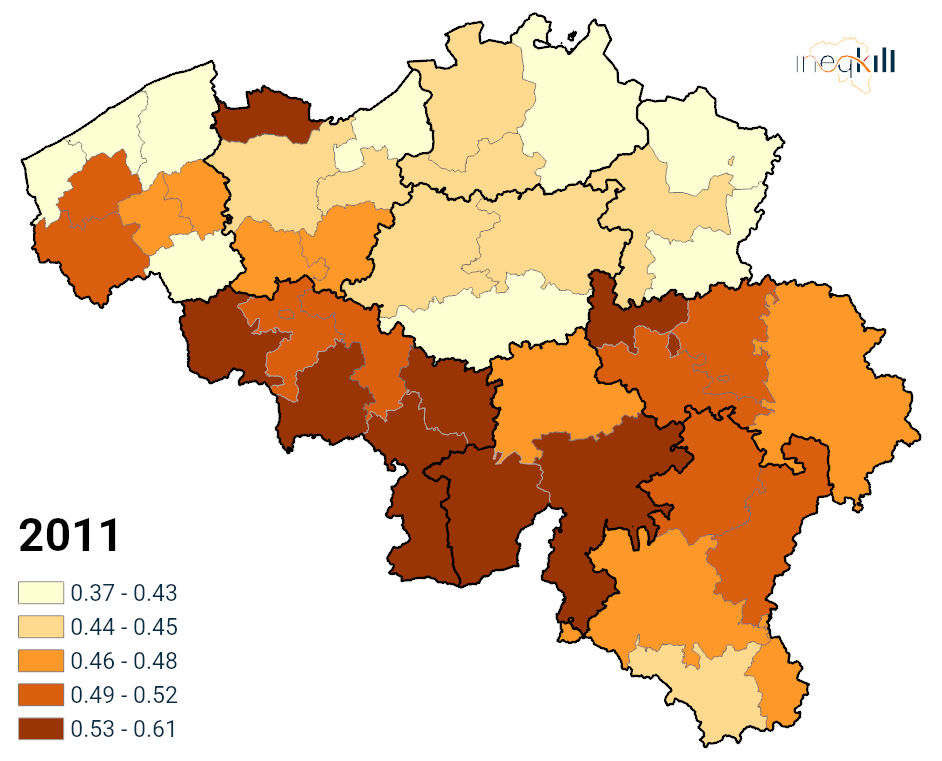
Figure 5: Cardiovascular mortality by district, 1890-2011
Source: State Archives Brussels, Mouvement de la population, 1890-1950; STATBEL, 1970-2011; calculations by the author.
National trends tell only part of the story. When cardiovascular mortality is mapped across Belgian districts between 1890 and 2011, clear regional differences emerge (Figure 5). Because the figures are adjusted for age, these patterns cannot simply be explained by some districts having older populations than others.
In 1890 and 1910, districts with high cardiovascular mortality were scattered across the country, with no clear regional pattern. This began to change during the 1930s, when some of the highest mortality rates were found in relatively prosperous urban areas such as Brussels and Charleroi. At that time, cardiovascular disease was still more common among wealthier groups, reflecting lifestyles that included richer diets and less physical activity.
Before 1950, mortality was also particularly high in major industrial centres such as Charleroi, Liège, and Mons. These regions were characterised by heavy industry, polluted air, demanding working conditions, and crowded living environments, all of which increased the risk of cardiovascular disease.
After 1950, however, this relationship gradually weakened. By the 1970s, industrialisation alone could no longer explain why some districts experienced higher cardiovascular mortality than others.
Instead, a new geographical pattern emerged. Several rural districts in Wallonia, including Marche-en-Famenne and Bastogne, recorded relatively high mortality. Limited access to hospitals and emergency medical services may have contributed, as people suffering heart attacks often faced longer delays before receiving treatment. Although ambulance services were expanding, rapid emergency care was not yet equally available throughout the country.
Lifestyle differences also became increasingly important. Research suggests that dietary habits differed between Wallonia and Flanders. For example, people in Wallonia generally consumed more butter and meat, which may have increased their risk of cardiovascular disease.
By the 1990s, the social geography of heart disease had changed profoundly. Cardiovascular disease was no longer concentrated among wealthier populations. Instead, it had become more common among socially disadvantaged groups. Districts such as Tongeren and Kortrijk, where educational attainment was relatively low, now experienced higher cardiovascular mortality. This reversal reflects the growing importance of social inequalities in shaping cardiovascular health.
Individual differences
Regional maps show where heart disease was most common, but they cannot tell us who was most affected. To answer that question, we turn to the detailed cause-of-death register of Antwerp, which records every death in the city between 1820 and 1939. Besides the cause of death, the register includes information such as age, sex, and occupation, making it possible to compare the risk of heart disease between different social groups.
Figure 6 compares the likelihood of dying from cardiovascular disease across occupational groups over time. During the first period (1820–1850), people from the social elite—such as business owners, lawyers, and engineers—were more likely to die from heart disease than skilled or unskilled workers. The highest risk was found among people with no recorded occupation, a category consisting mainly of older, retired individuals.
Between 1851 and 1880, these social differences became smaller, although the elite still experienced higher cardiovascular mortality than most working-class groups.
Around the beginning of the 20th century (1881–1909), the pattern started to shift. Skilled workers and the lower middle class recorded almost similar mortality than the elite.
During the period 1910–1939, the social gradient changed further among women, with the elite experiencing lower cardiovascular mortality than all lower social classes.
Overall, the Antwerp data reflect the broader patterns observed across Belgium. During the early and mid-19th century, cardiovascular disease was more often recorded among wealthier people and retirees. Over time, these differences narrowed as heart disease became more widespread throughout society. By the 20th century, the social pattern had become much less stable, with the groups at highest risk changing from one period to another.
Several factors may explain these shifts. In the 19th century, wealthier people were more likely to survive infectious diseases and live to older ages, when cardiovascular disease becomes more common. At the same time, richer diets, more sedentary lifestyles, and the stresses associated with business and public life may also have increased their risk. As living conditions improved and infectious diseases declined, cardiovascular disease gradually became a condition affecting a much broader share of the population.
Figure 6: The chance of dying from heart disease between high and low occupational groups and between men and women
Calculations based on odds ratios with the Unskilled workers = 1. Values >1 represent a bigger chance of dying from heart disease then the unskilled workers, values <1 represent a smaller chance of dying from heart disease then unskilled workers.
Source: Felixarchief Antwerp, Cause-of-death registers; Quetelet Center, Database S.O.S. Antwerp; calculations by the author.
Figure 7: Obesitas is not new

Lifestyle and diet also differed greatly between social groups in the 19th century. Studies of food consumption show that working-class families relied mainly on bread, potatoes, vegetables, milk, and chicory coffee. Meat and fish were expensive and therefore eaten only occasionally, often on Sundays. Bread formed the basis of the diet and accounted for a large share of household spending.
The upper classes lived very differently. Food was not only a source of nourishment but also a symbol of wealth and social status. Their meals, often inspired by French haute cuisine, included generous amounts of meat, rich sauces, pastries, and imported products such as coffee, tea, wine, sugar, and spices. Cafés, salons, and restaurants became important places where the urban bourgeoisie met and socialised.
Brussels played a leading role in this new dining culture. During the 19th century, the number of restaurants in the city grew from fewer than 10 to more than 300, illustrating how quickly eating out became part of middle- and upper-class life.
Compared with working-class families, wealthier Belgians generally consumed more calories and a much larger proportion of animal fats. Contemporary caricatures and descriptions often portrayed members of the bourgeoisie as well-fed or overweight. These marked differences in diet and lifestyle may help explain why cardiovascular disease was more frequently recorded among higher occupational groups during the 19th century.
Over time, however, the social pattern of cardiovascular disease began to change. As medical knowledge grew, people with higher incomes and higher levels of education were often the first to adopt healthier lifestyles. They reduced smoking, improved their diets, exercised more, and benefited earlier from preventive healthcare and new treatments. These changes help explain why, from the late 20th century onwards, cardiovascular disease became increasingly concentrated among people with lower incomes or lower levels of education.
The history of cardiovascular disease shows that patterns of health and inequality are not fixed. In the 19th century, heart disease was more commonly associated with the upper classes, who were more likely to survive infectious diseases and often had richer diets and more sedentary lifestyles. By the late 20th century, the pattern had largely reversed, with the highest risks increasingly found among people in lower socio-economic groups.
Looking back at these changes reminds us that health inequalities are shaped by the interaction between social conditions, lifestyle, medical progress, and access to healthcare. As these factors change over time, so too do the diseases that affect different groups in society.
Our publications
Do you want to know more about our research on cardiovascular disease in Belgium? You can explore our published articles below:
- Bevernaegie, L., Devos, I., & Gadeyne, S. (2024). Where did people die from cardiovascular disease? Spatial inequalities in cardiovascular mortality in Belgium between 1890 and 2011. Space, Populations, Societies, 2023/3-2024/1. (https://doi.org/10.4000/12tpu).
- Bevernaegie, L., Gadeyne, S., & Devos, I. (forthcoming). A century of heartbreak: district-level drivers of cardiovascular mortality in Belgium (1890-1992).
Read more
- Brohet, C., & Clement, D. (2018). 70 jaar cardiovasculaire preventie (1948-2018). Hart & slagaders: Tijdschrift van de Belgische Cardiologische Liga, 2018(1), pp. VI-X.
- Dattani, S. (2025, August 4). Death rates from cardiovascular disease have fallen dramatically: what were the breakthroughs behind this? Our World in Data.Org. (retrieved September 7, 2026 from https://ourworldindata.org/cardiovascular-deaths-decline).
- Grimmeau, J.P., et al. (2015). Atlas van België: bevolking. In Derde atlas van België(Vol. 6). Gent: Academia Press. (https://www.atlas-belgique.be/index.php/nl/papieren-versie/3de-atlas-van-belgie)
- Hacha, T. (forthcoming). From death to data: the history of cause-of-death registration in Belgium (1820-1960).
- Mensah, G.A., et al. (2017). Decline in cardiovascular mortality. Circulation Research, 120(2), 366-380. (https://doi.org/10.1161/CIRCRESAHA.116.309115).
- Wall, E.E., (ed.). (2014). Canon van de cardiologie. Haarlem: DCHG Medische Communicatie.
- Perciaccante, A., Riva, M.A., Coralli, A., Charlier, P., & Bianucci, R. (2016). The death of Balzac (1799-1850) and the treatment of heart failure during the nineteenth Century. Journal of Cardiac Failure, 22(11), 930-933. (https://doi.org/10.1016/j.cardfail.2016.09.005).
- Reid, A., Garrett, E., Dibben, C., & Williamson, L. (2015). A confession of ignorance: deaths from old age and deciphering cause-of-death statistics in Scotland, 1855-1949. The History of the Family, 20(3), 320-344. (https://doi.org/10.1080/1081602X.2014.1001768).
- Vandeputte, C. (2015). De geschiedenis van de dringende geneeskundige hulpverlening in België tot 1988(Vol. 1). Avelgem: Chris Vandeputte.
- Vandeputte, C., & Vanhessche, J. (2017). De dringende geneekundige hulpverlening in België vanaf 1988 (vol. 2). Avelgem-Kortrijk: Chris vandeputte – Joost Vanhessche.
- Waldron, I. (1991). Patterns and causes of gender differences in smoking. Social Science & medicine, 32(9), 989-1005. (https://doi.org/10.1016/0277-9536(91)90157-8).
Data sources
- State Archives Brussels, Mouvement de la population et de l’état civil, 1888-1976.
- STATBEL, Databases DEMOBEL and Mortality, 1969-2020.
- Ghent University – Quetelet Center, Databases HISSTER and S.O.S. Antwerp.